
Source segregation of industrial waste: where to start on a production site
5 October 2026
Sorting waste where it is produced reduces risks, simplifies removal and opens the way to recovery. Here is how to start the process on an industrial site, step by step.
On a production site, waste mixes quickly: an empty oil drum next to cardboard, soiled rags in the general waste skip, packaging from chemical products thrown away with everything else. This mixing has a cost: it makes the whole load hazardous, rules out any recovery and complicates removal. Segregation at source, meaning at the exact point where the waste is produced, is the simplest and most cost-effective way to regain control.
Why sort from the moment of production
A sorted waste is a waste whose nature is known. The benefits are concrete:
- Safety: incompatibilities between products (acids and bases, solvents and oxidizers) and fires in skips are avoided.
- Volume control: a small quantity of hazardous waste no longer contaminates a large volume of ordinary waste.
- Recovery: metals, pallets, cardboard, used oils or clean plastics can find a second life, provided they have not been mixed.
- Compliance: the operator remains responsible for its waste until final disposal, and Senegal's Environmental Code expects it to know what it produces and where it goes.
Step 1: know what you produce
Before buying a single bin, walk the site with the workshop managers. The aim is a simple inventory:
- the workstations that produce waste (production, maintenance, mechanical workshop, laboratory, store, offices);
- the nature of each stream: liquid or solid, hazardous or not, clean or soiled;
- approximate quantities, recorded over a few weeks rather than estimated from memory;
- the current destination of each stream, and who collects it.
This survey almost always reveals surprises: a hazardous stream thrown out with general waste, or a recoverable stream sent to landfill.
Step 2: define few streams, but clear ones
A frequent mistake is to create fifteen categories from the start. Teams get lost and sorting deteriorates within weeks. Start with four to six streams, for example:
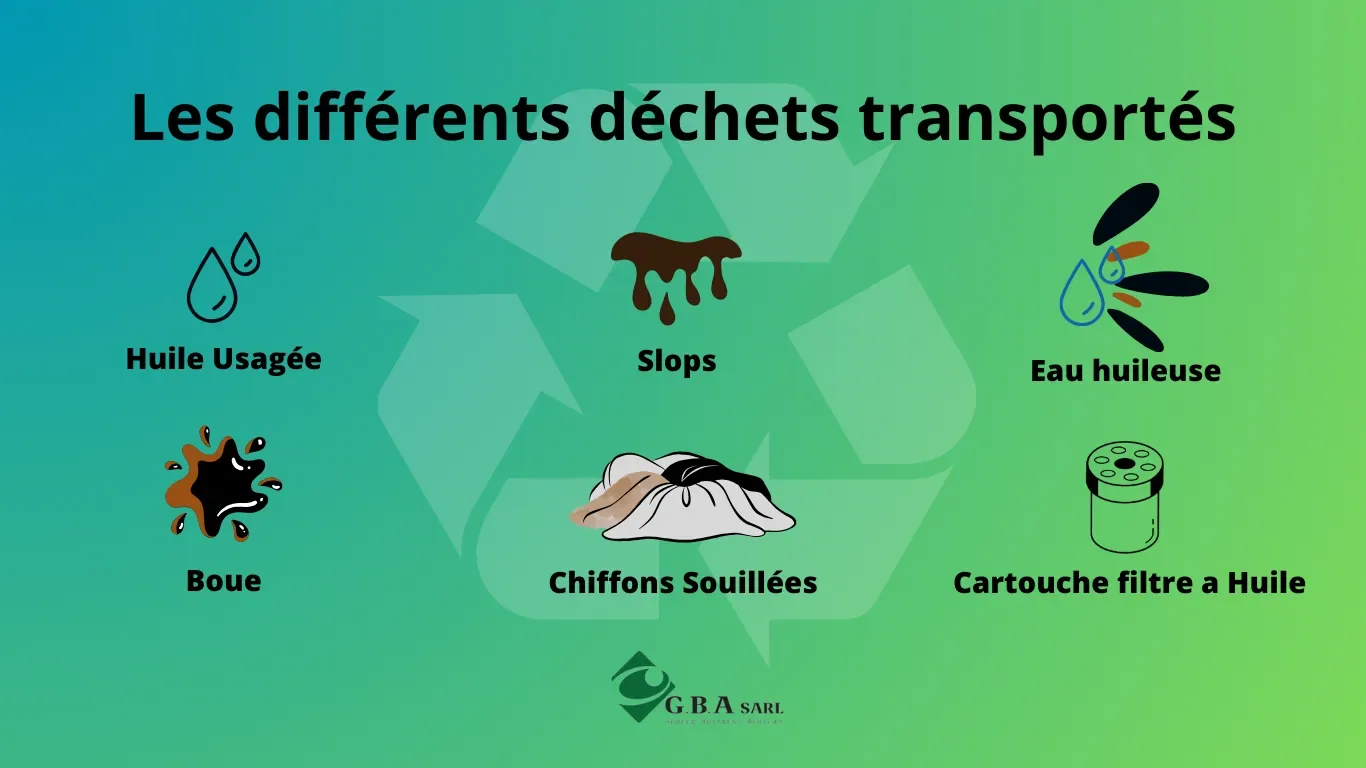
- liquid hazardous waste (used oils, solvents, oily water);
- solid hazardous waste (soiled rags and absorbents, used filters, packaging that held hazardous products);
- clean recyclable waste (cardboard, paper, metals, pallets);
- non-recoverable general waste;
- site-specific cases (batteries, electronic equipment waste, infirmary waste).
You can refine later, once the first streams are under control.
Step 3: equip the points of production
Sorting only lasts if it is easier than mixing. A few principles:
- place the right container where the waste is created, not at the end of the corridor;
- choose containers suited to their content: retention trays for liquids, closed drums for oils, resistant containers for sharp waste;
- standardize colors and labels across the site, with readable pictograms and, where needed, in several languages;
- provide a sheltered temporary storage area with a sealed floor, containment and restricted access, where waste waits for collection.
Step 4: train and empower
Sorting without training does not last. A short hands-on session at the workstation is worth more than a long classroom presentation. Appoint a lead for each workshop, in charge of checking containers and answering questions. Build the instruction into work procedures and into the induction of new arrivals and subcontractors, who often produce waste on site without knowing the rules.
Step 5: check, measure, adjust
Plan regular checks of bin contents: a weekly visual check is enough at first. Note the frequent mistakes and address their cause (a badly placed bin, an ambiguous label) rather than blaming people. Then track two simple indicators: the quantity of hazardous waste produced and the share of waste recovered. Their evolution will show whether the approach works.
Mistakes to avoid
- Equipping the site without training the teams.
- Multiplying streams before the first ones are stable.
- Forgetting temporary storage: good sorting followed by open-air storage is worthless.
- Entrusting collection to a contractor without checking that it is qualified for the type of waste.
After sorting
Sorting prepares what follows: collection, transport and disposal or recovery. It is also the first link in traceability, since a waste whose nature is unknown cannot be tracked. GBA SARL supports industrial companies in managing their hazardous waste, from collection to disposal; its services are presented on this website, and you can describe your needs through a quote request.
Read also
Why opt for sustainable industrial waste management?
With industrial waste on the increase, responsible management is becoming a major challenge. Improper disposal pollutes the air, water and soil, jeopardising the environment and public health.

5 eco-responsible actions for industrial companies
Adopting sustainable practices is essential if industrial companies are to reduce their environmental impact. Here are five practical steps to take:
Comment bien stocker vos huiles usagées avant la collecte
Le stockage sécurisé des huiles usagées est essentiel pour préserver l'environnement et respecter la réglementation. Voici un guide complet pour une gestion optimale de vos déchets hydrocarbures.